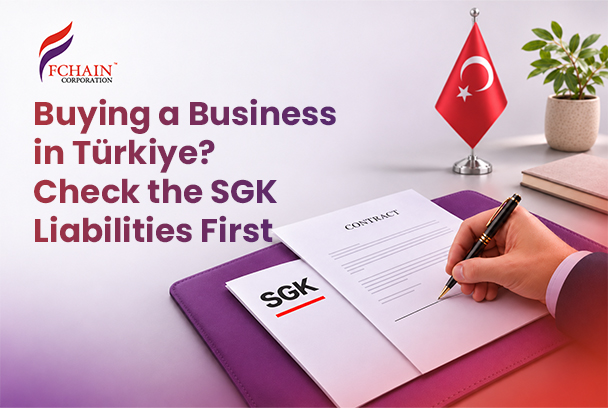
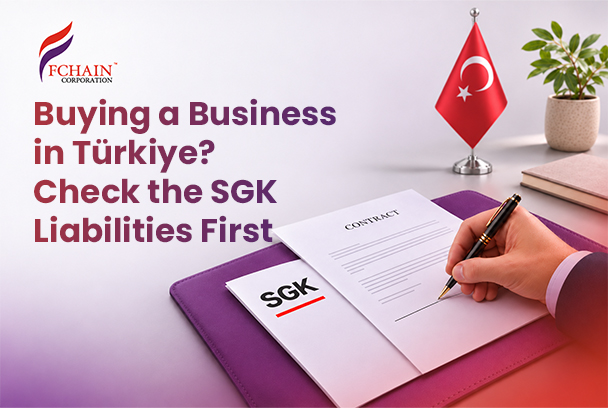
When acquiring or transferring a business in Türkiye, companies typically focus on purchase agreements, financial due diligence, and trade registry procedures.
However, one critical area is often overlooked: Social Security Institution (SGK) obligations.
Under Turkish Social Insurance and General Health Insurance Law No. 5510, business transfers, mergers, corporate restructuring, and workplace relocations may trigger significant reporting obligations and financial liabilities.
Here are the key considerations for employers and investors:
- Mandatory notification deadlines
Employers must notify the Social Security Institution within specific statutory periods:
Company type conversions, mergers, or acquisitions by incorporation: Within 10 days following the relevant trade registry announcement.
Business transfers or workplace relocations to another province: Within 10 days following the transfer or relocation date.
Admission of a new partner to an ordinary partnership: Within 10 days following admission.
Business transfers through inheritance: Within three months of the employer’s death.
Failure to comply may result in administrative fines ranging from one to three times the monthly minimum wage, depending on the employer’s bookkeeping obligations.
Importantly, not every corporate change requires a new workplace registration. For example, a share transfer in a limited liability company does not, by itself, constitute a change of employer.
- The hidden financial risk: joint and several liability
One of the most significant provisions is Article 89 of Law No. 5510.
When an operating workplace is transferred together with its assets or liabilities, the acquiring employer may become jointly and severally liable for the previous employer’s outstanding social security obligations, including:
- Unpaid social security contributions
- Late payment penalties
- Default interest
- Other associated charges
A contractual clause stating that historical liabilities remain with the seller does not eliminate the buyer’s liability towards SGK.
This means that acquiring a business without properly reviewing its social security records can expose the buyer to substantial historical liabilities.
- Business transfers vs. Share transfers
Not every change in ownership qualifies as a workplace transfer under social security legislation.
For example:
- A transfer of shares in a limited liability company does not automatically constitute a workplace transfer.
- Selling or leasing a building or machinery alone does not necessarily qualify as a transfer of an operating workplace.
- A transfer of an active business, including its workforce and operational infrastructure, may trigger registration and liability obligations.
- The legal structure of the transaction is therefore crucial.
- Employment law and social security law are not the same
Business transfers are also regulated under Article 6 of Turkish Labour Law No. 4857.
However, the two legal frameworks serve different purposes:
Labour law: Protects employees and regulates the continuity of employment contracts. The transferring employer’s joint liability is generally limited to two years.
Social Security Law: Protects SGK receivables. The relevant liability is not subject to the same two-year limitation and may continue within the applicable statutory limitation period.
A transaction that satisfies employment law requirements may therefore still create additional social security exposure.
- What Happens to Employees?
In qualifying business transfers, employment contracts and social security rights generally continue without interruption.
As a result:
- Employees do not normally need to be terminated and rehired.
- Separate SGK termination and new employment notifications are generally unnecessary.
- The existing workplace registration is typically updated under the acquiring employer.
- Relocation to another province requires a new workplace registration.
- Key Takeaway for Business Owners and Investors
Before completing a business acquisition, merger, or restructuring in Türkiye, companies should:
- Conduct social security due diligence and review outstanding SGK liabilities.
- Assess whether the transaction legally constitutes a workplace transfer.
- Identify the applicable notification deadlines.
- Evaluate historical contribution liabilities when determining the transaction price.
- Ensure that employment law and social security compliance are addressed separately.
A business acquisition is not just a transfer of assets and operations. It may also involve the transfer of significant statutory financial obligations.
Understanding these risks before signing can prevent costly surprises after closing.
Legal reference: Turkish Law No. 5510, Articles 11 and 89; Turkish Labour Law No. 4857, Article 6.